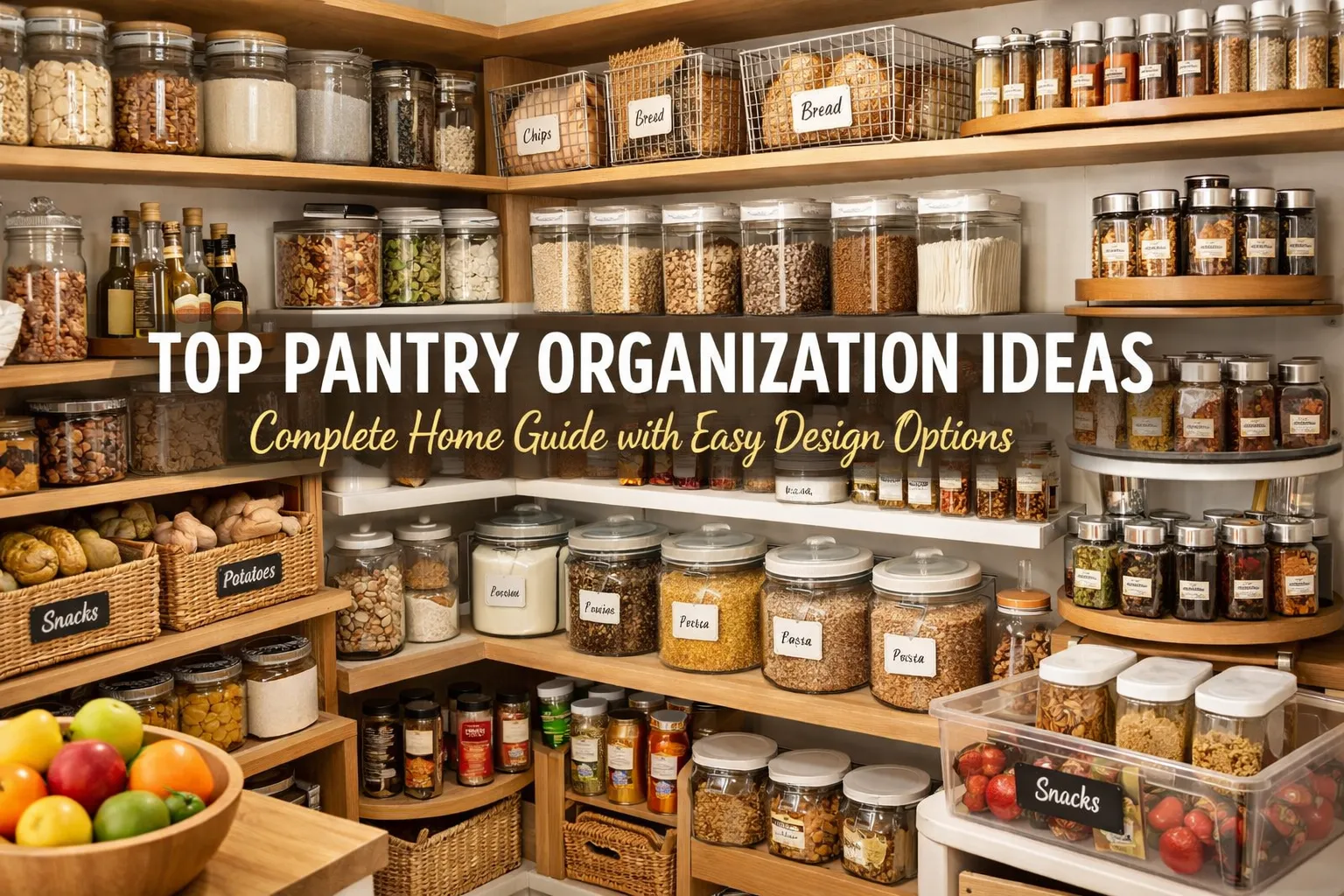
If your kitchen is cramped, disorganized or just hard to use, you’re not alone. Cabinet chaos, expired ingredients and wasted storage space are problems that many homes face. Luckily, the perfect pantry organization ideas can change all of that — and it doesn’t require an entire renovation or endless trips to a specialty store.
A well-organized pantry makes meal prep speedier, grocery shopping easier and your kitchen look cleaner and more stylish. From a walk-in pantry to shelves with limited space, smart storage solutions can make the most of every square inch. Simple changes, from clear containers to labeled bins and space-saving shelving, can make all the difference.
In the ultimate guide to pantry organization ideas, you’ll find simple and practical steps that will help anyone organize their pantry without breaking the bank, and with what is truly useful for real homes. In the end, you’ll have a clutter-free pantry that’s beautiful to look at, saves time and makes everything easy to find.
Key Takeaways
- Clear containers create a clean, uniform look.
- Labeling saves time and prevents food waste.
- Vertical storage maximizes small pantries.
- Baskets and bins help group similar items.
- Budget solutions can work as well as premium ones.
What This Guide Covers
- Step-by-step pantry organization process
- Tools and materials you’ll need
- Top design variations
- Cost comparisons
- Common mistakes and solutions
- Maintenance and pro tips
Why It Matters
- Saves time during cooking and grocery shopping
- Reduces food waste
- Makes your kitchen look cleaner and more modern
- Maximizes small storage spaces
- Improves daily kitchen efficiency
Before You Start
- Empty the pantry completely first.
- Check expiration dates.
- Clean shelves thoroughly.
- Measure your space before buying containers.
- Decide your storage style (minimal, farmhouse, modern, etc.).
Materials & Tools You’ll Need
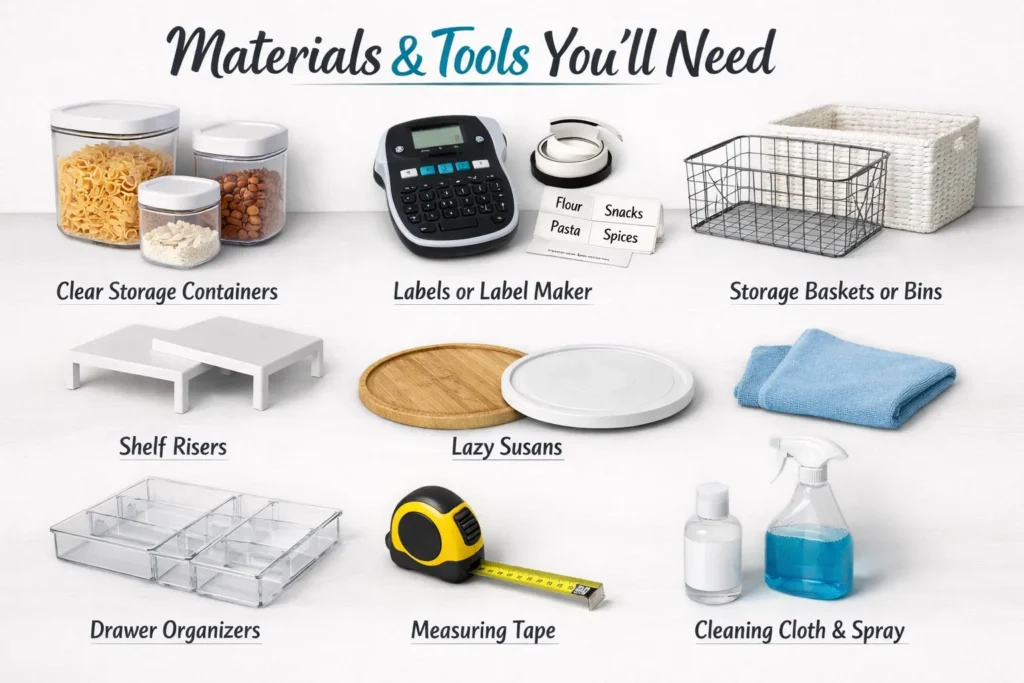
- Clear storage containers
- Labels or label maker
- Storage baskets or bins
- Shelf risers
- Lazy Susans
- Drawer organizers
- Measuring tape
- Cleaning cloth and spray
Step-by-Step Guide (How-To)
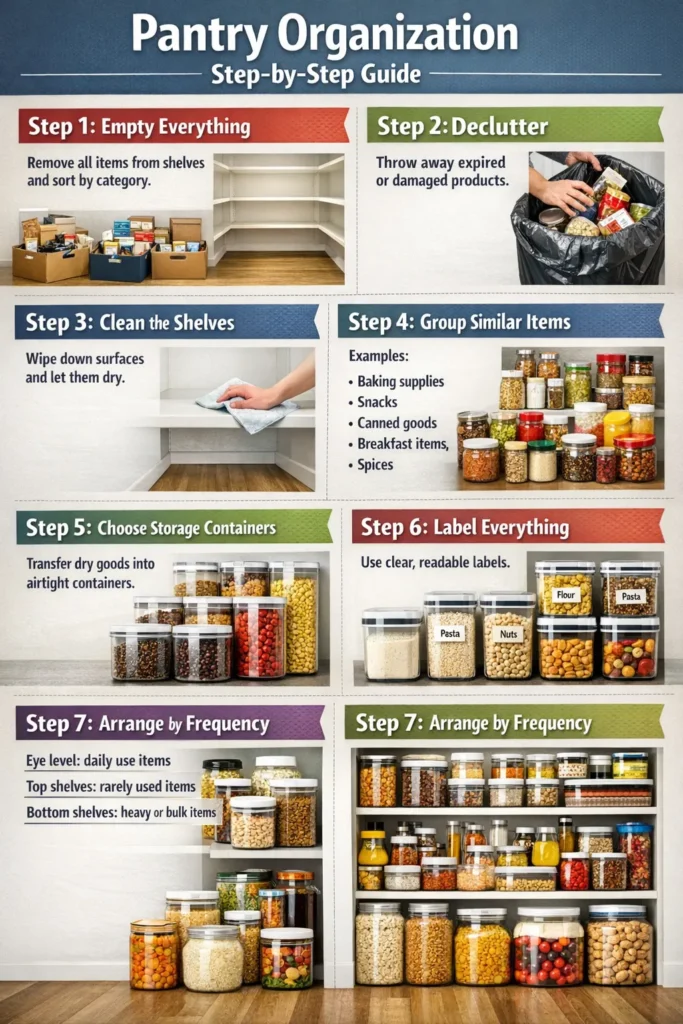
Step 1: Empty Everything
Remove all items from shelves and sort by category.
Step 2: Declutter
Throw away expired or damaged products.
Step 3: Clean the Shelves
Wipe down surfaces and let them dry.
Step 4: Group Similar Items
Examples:
- Baking supplies
- Snacks
- Canned goods
- Breakfast items
- Spices
Step 5: Choose Storage Containers
Transfer dry goods into airtight containers.
Step 6: Label Everything
Use clear, readable labels.
Step 7: Arrange by Frequency
- Eye level: daily use items
- Top shelves: rarely used items
- Bottom shelves: heavy or bulk items
Measurements & Size Guide
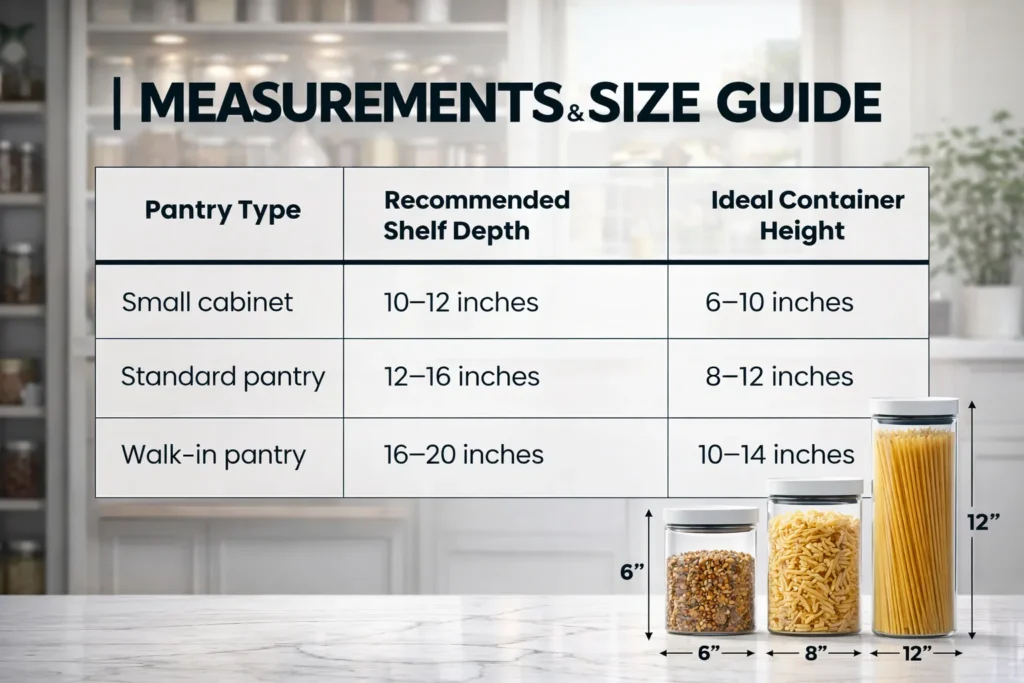
| Pantry Type | Recommended Shelf Depth | Ideal Container Height |
|---|---|---|
| Small cabinet | 10–12 inches | 6–10 inches |
| Standard pantry | 12–16 inches | 8–12 inches |
| Walk-in pantry | 16–20 inches | 10–14 inches |
Design Options & Style Variations
Top 10 high-demand styles (Pinterest, Google, Bing):
1. Clear Container Pantry
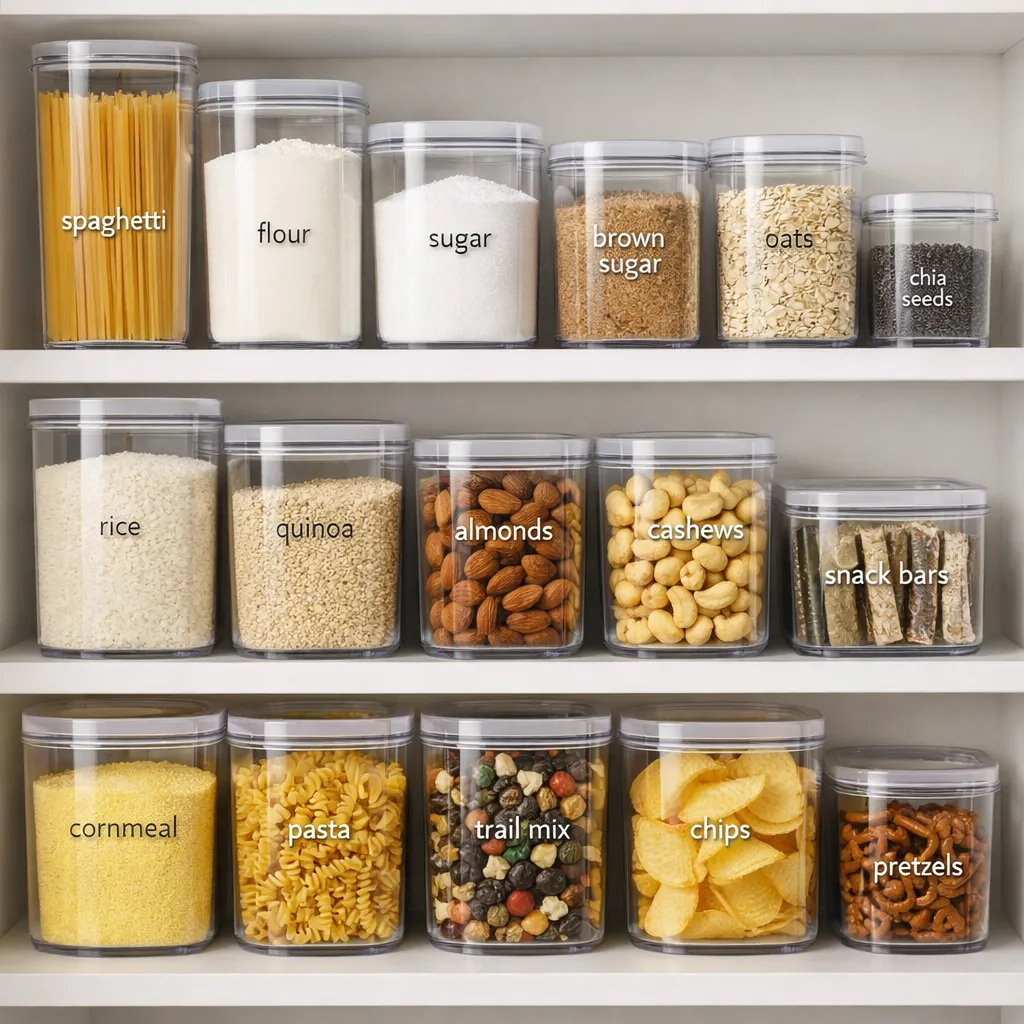
- Use matching transparent containers.
- Label with minimal fonts.
- Arrange by size.
2. Basket-Organized Pantry
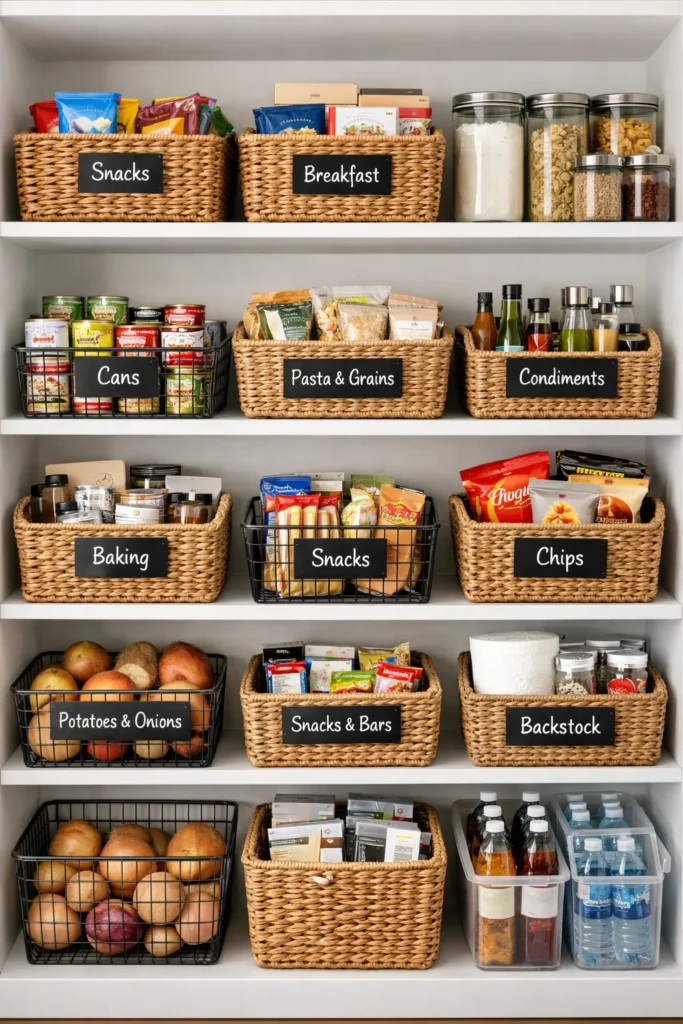
- Use woven or wire baskets.
- Group items by category.
- Add labels on baskets.
3. Minimalist White Pantry
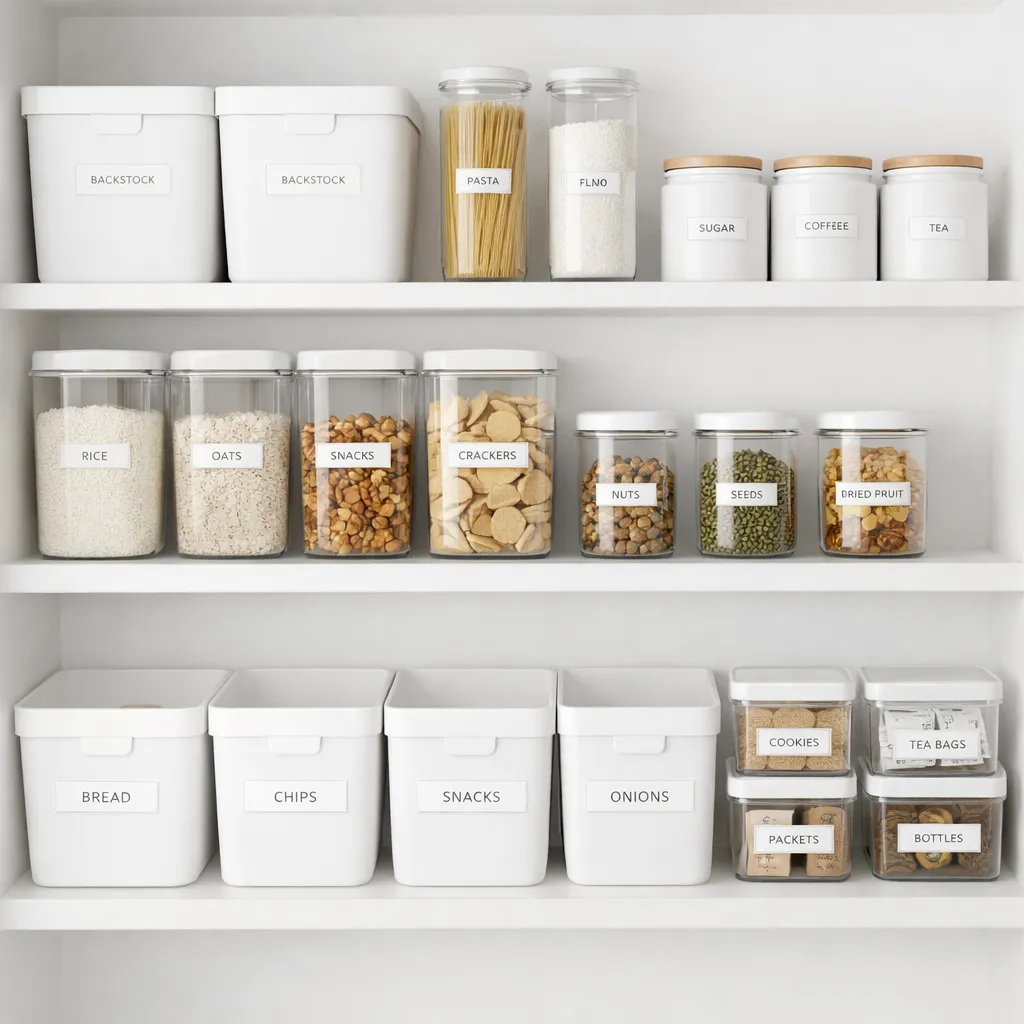
- White bins and containers.
- Neutral labels.
- Clean, uncluttered shelves.
4. Farmhouse Pantry Style
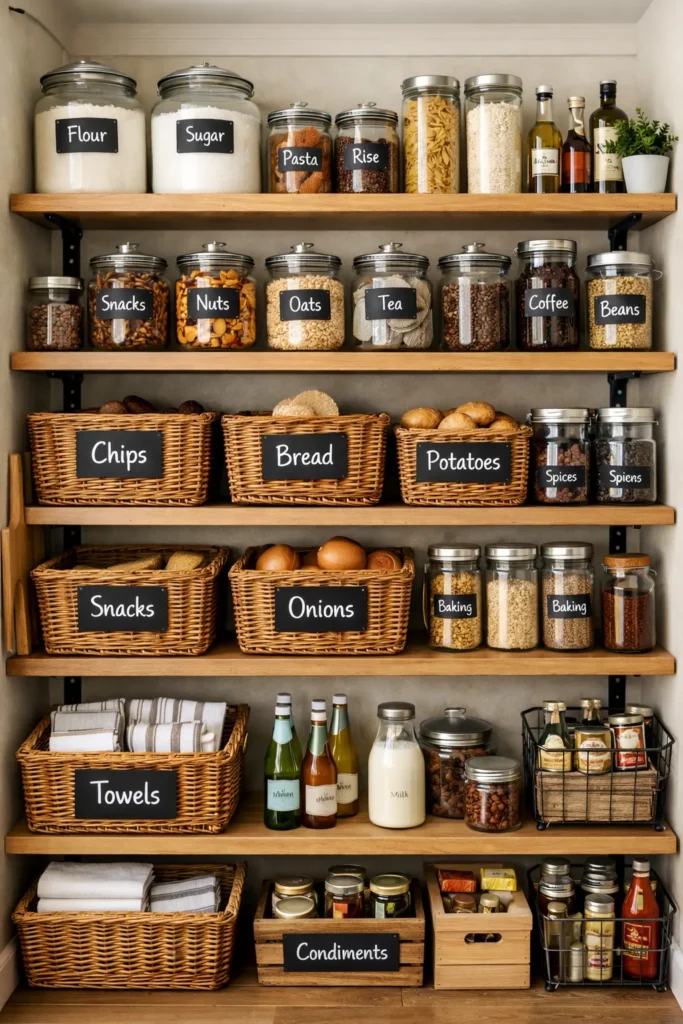
- Wood shelves.
- Wicker baskets.
- Chalkboard labels.
5. Small Cabinet Pantry
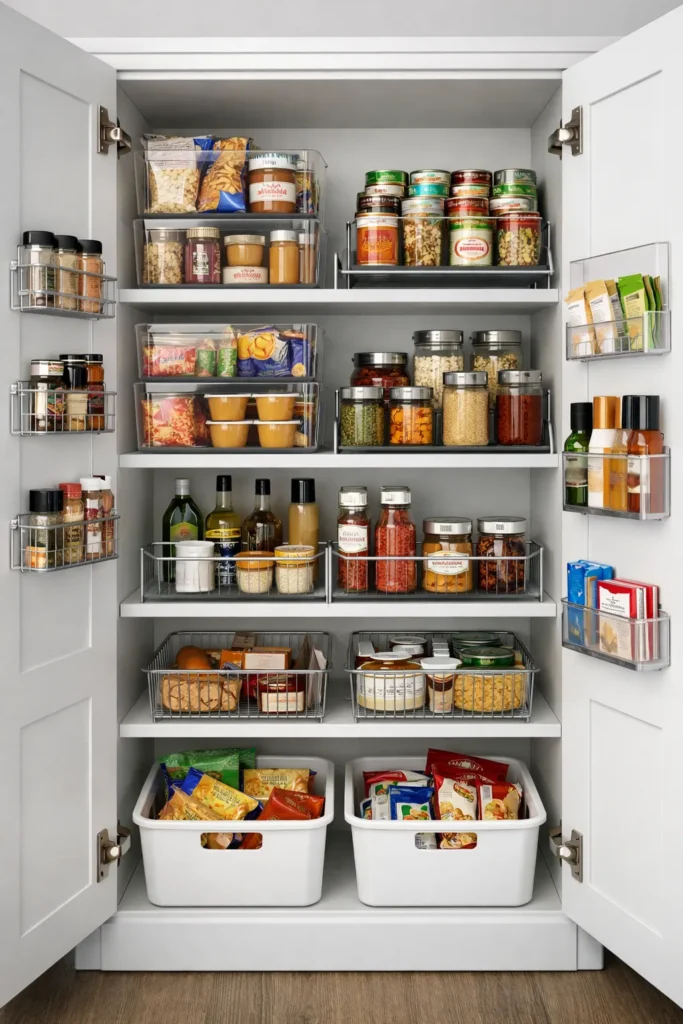
- Use stackable bins.
- Install shelf risers.
- Use door organizers.
6. Lazy Susan Corner Pantry
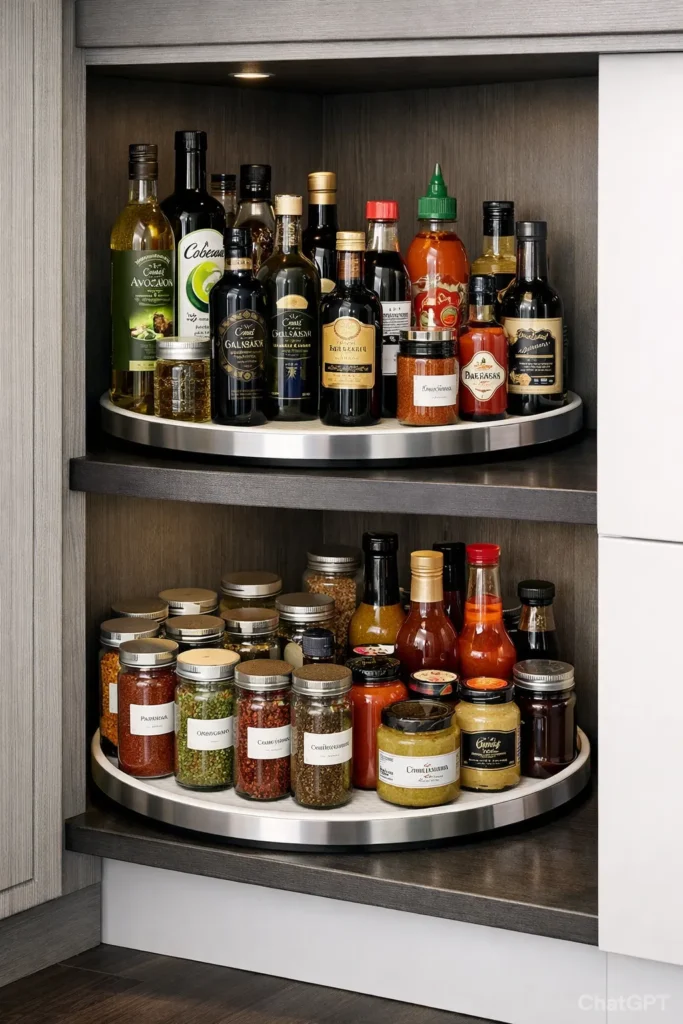
- Place turntables on deep shelves.
- Store oils, sauces, or spices.
7. Drawer-Style Pantry
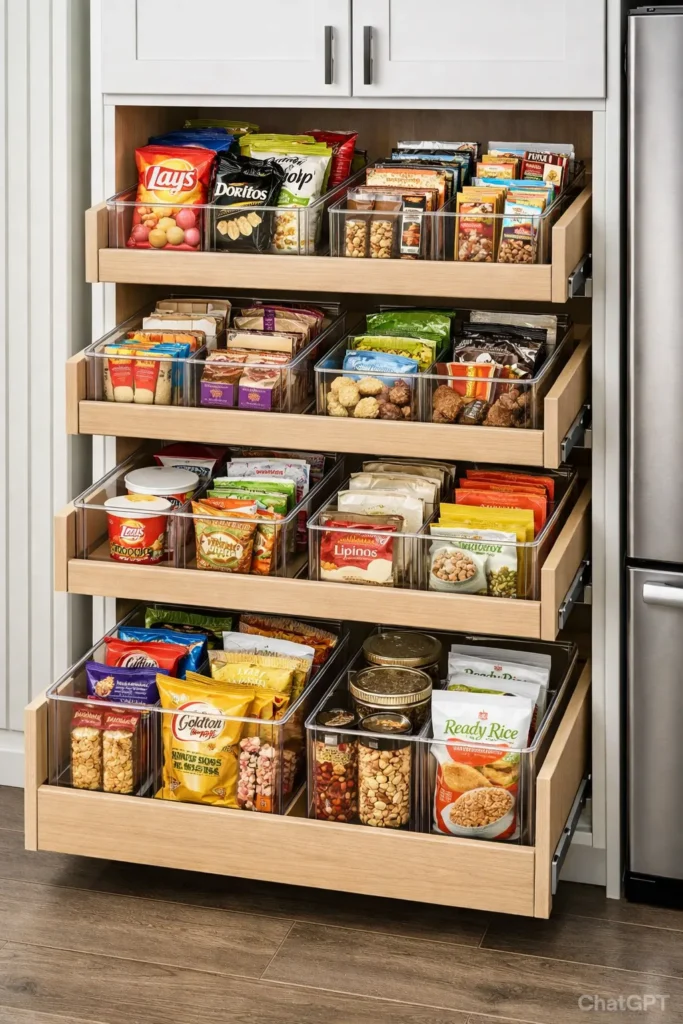
- Use sliding bins.
- Organize snacks and packets.
8. Color-Coded Pantry
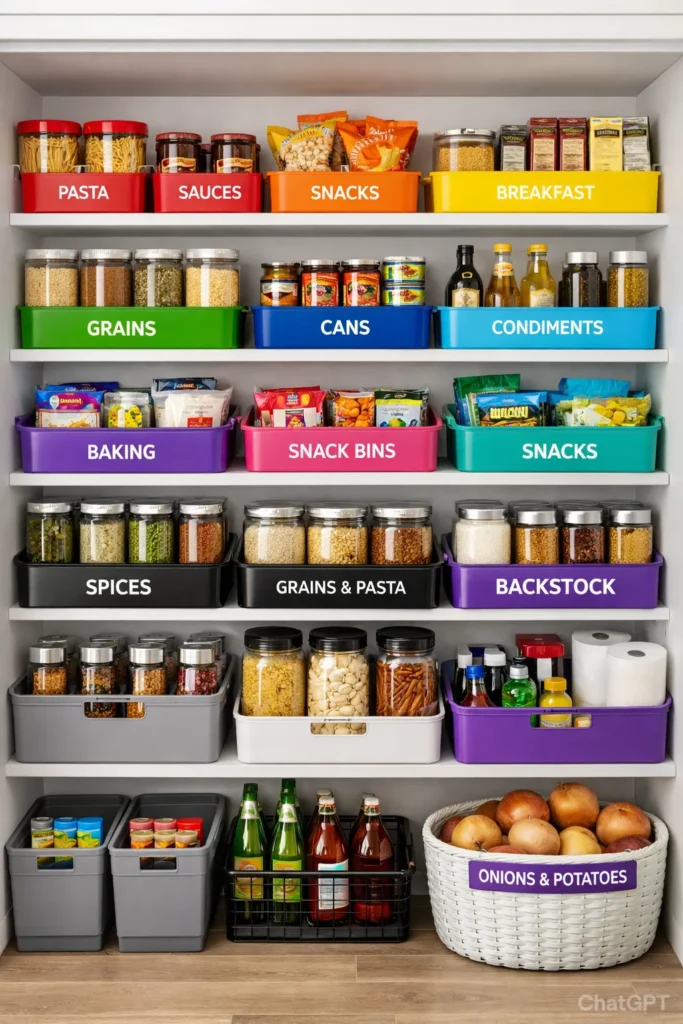
- Use colored labels.
- Assign colors by category.
9. Glass Jar Pantry
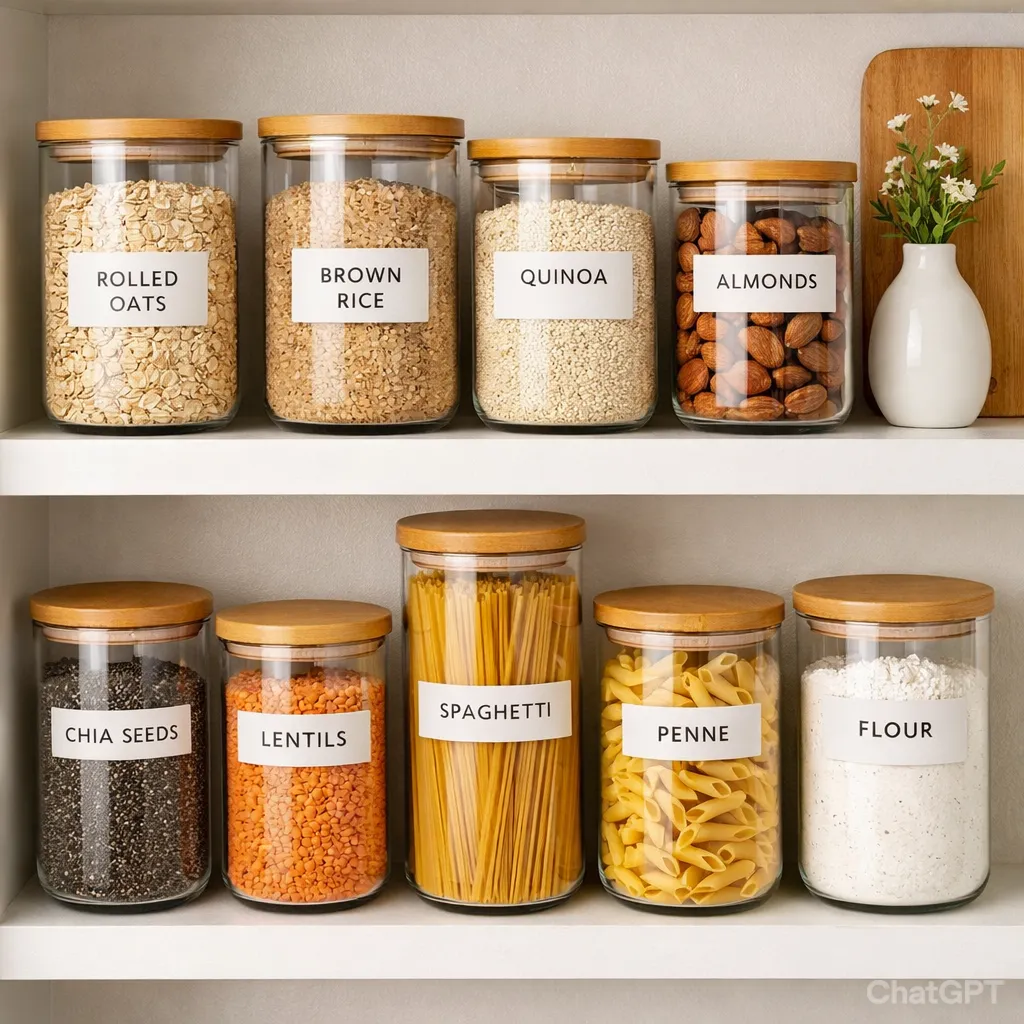
- Store grains and pasta in glass jars.
- Keep labels simple and elegant.
10. Budget Dollar-Store Pantry
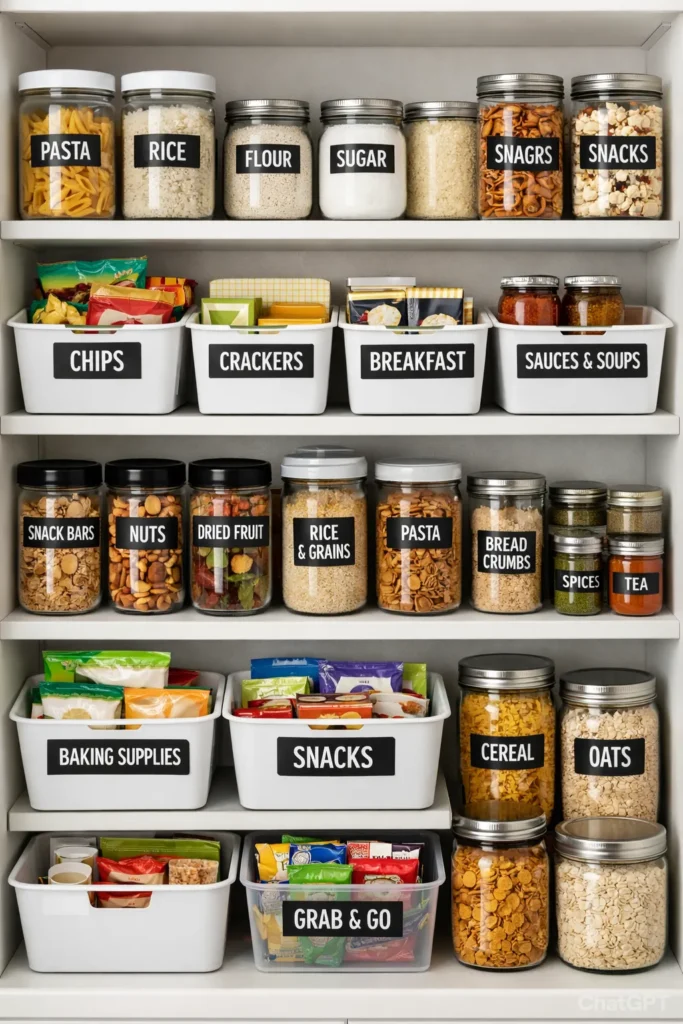
- Use plastic bins.
- DIY printed labels.
- Reuse jars and containers.
Best Picks & Recommended Options
- Clear stackable containers with labels
- Basket + bin mixed system
- Minimalist white container setup
Cost & Budget Overview
| Setup Type | Estimated Cost |
|---|---|
| Budget DIY | $20–$40 |
| Mid-range containers | $50–$120 |
| Premium full system | $150–$400 |
Pricing Breakdown
| Tier | What You Get | Cost |
|---|---|---|
| Budget | Plastic bins, DIY labels | $20–$40 |
| Mid-range | Clear containers + baskets | $50–$120 |
| Premium | Glass jars, custom labels, shelf upgrades | $150–$400 |
Comparison
| Feature | Clear Containers | Basket System |
|---|---|---|
| Visibility | High | Medium |
| Style | Modern | Rustic |
| Cost | Medium | Low to medium |
| Maintenance | Easy | Moderate |
Pros & Cons
| Method | Pros | Cons |
|---|---|---|
| Clear containers | Easy to see contents | Higher cost |
| Baskets | Stylish, flexible | Less visibility |
| Mixed system | Balanced look | Needs planning |
Common Mistakes to Avoid
| Mistake | Result |
|---|---|
| Not measuring shelves | Containers don’t fit |
| Overbuying organizers | Wasted money |
| No labels | Confusion |
| Mixing categories | Messy appearance |
Pro Tips
| Do | Don’t |
|---|---|
| Use uniform containers | Mix too many styles |
| Label clearly | Skip labeling |
| Store by frequency | Hide daily items |
Troubleshooting
| Problem | Fix |
|---|---|
| Pantry still looks cluttered | Use uniform containers |
| Can’t reach items | Add pull-out bins |
| Food expiring | Label purchase dates |
Maintenance & Care Tips
- Check expiration dates monthly.
- Wipe shelves every 2–4 weeks.
- Refill containers as needed.
- Adjust categories seasonally.
Time Required & Difficulty Level
| Task | Time | Difficulty |
|---|---|---|
| Decluttering | 30–60 minutes | Easy |
| Container setup | 30 minutes | Easy |
| Full pantry makeover | 2–3 hours | Medium |
Safety Notes & Warnings
| Issue | Safety Tip |
|---|---|
| Heavy items | Store on lower shelves |
| Glass containers | Keep away from edges |
| Step stools | Use stable ladder |


Product Recommendations & Shopping List
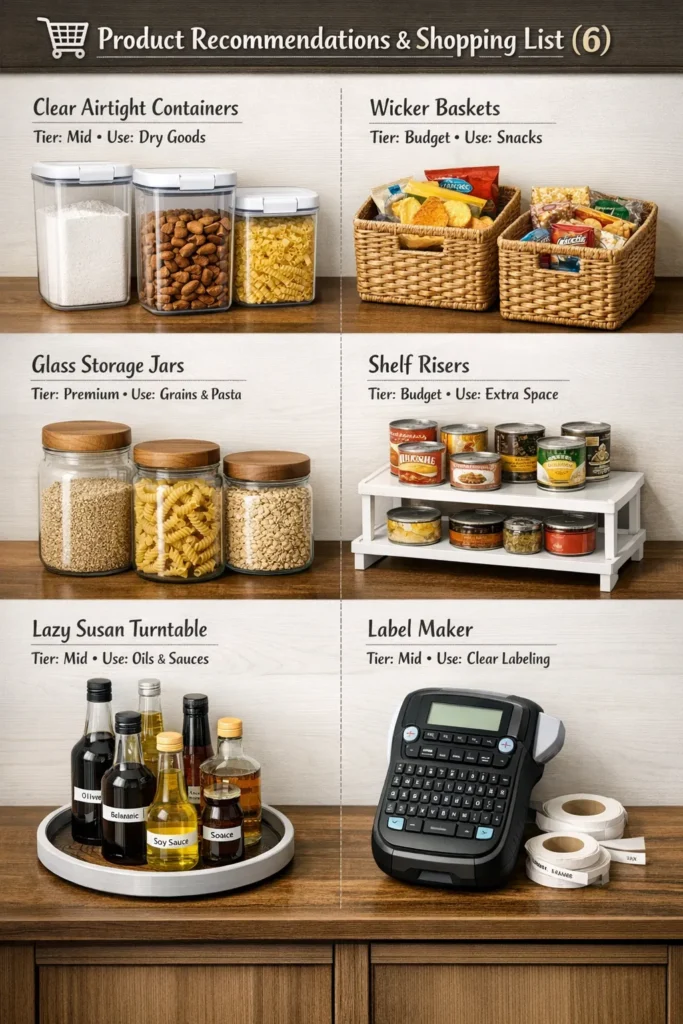
| Product | Tier | Use |
|---|---|---|
| Clear airtight containers | Mid | Dry goods |
| Wicker baskets | Budget | Snacks |
| Glass storage jars | Premium | Grains & pasta |
| Shelf risers | Budget | Extra space |
| Lazy Susan turntable | Mid | Oils & sauces |
| Label maker | Mid | Clear labeling |
FAQ
1. What is the easiest pantry organization idea?
Using clear containers and labels is the simplest and most effective method.
2. How often should I organize my pantry?
A quick check monthly and a deep clean every 3–6 months.
3. Are baskets or containers better?
Containers are better for visibility; baskets are better for grouping.
4. How do I organize a very small pantry?
Use vertical storage, door racks, and stackable bins.
5. What should go on the top shelf?
Rarely used or lightweight items.
6. How do I prevent food waste?
Use labels and rotate items regularly.
7. Are glass containers worth it?
They’re more durable and stylish but cost more.
8. What’s the best budget solution?
Plastic bins with printed labels.
9. Should I decant everything?
Only dry goods like rice, flour, pasta, and cereal.
10. How do I keep it organized long-term?
Return items to their assigned zones after use.
Final Thoughts
A well-organized pantry isn’t just for its looks; it’s also for day-to-day living. With good pantry organization you can make the most of any space, no matter how small – and one of these smart kitchen cabinet storage ideas will be right for your home. The trick is to keep it simple: edit frequently, store in see-through boxes, label everything and group like with like.
Whether you go for a minimalist canisters and boxes setup, an appealingly rustic basket system, or a budget-friendly do-it-yourself plan of attack, the best pantry organizing solution is whatever works for your life and kitchen size. If you need to, “start small and grow your system,” organizing one shelf at a time.
A well-organized pantry will save you money, reduce stress and make cooking more fun over time. With the steps and variations you’ll find in this guide, you can have a neat, functional pantry that’s attractive and perfectly designed to accommodate your daily life.



Leave a Reply